
Burhan Doğuş Ayparlar - July 18, 2026
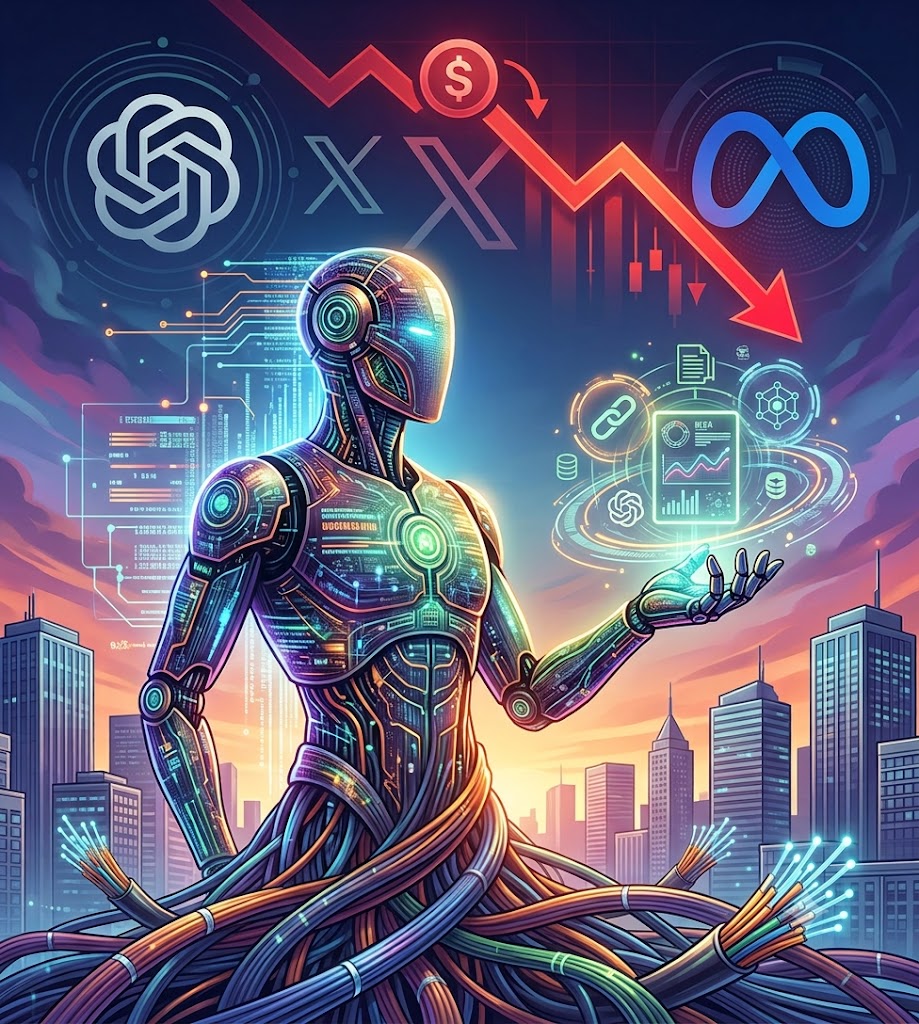
Over the past two weeks, tech giants have sequentially unveiled their flagship models, fundamentally shaking market dynamics. Shortly after SpaceXAI announced Grok 4.5, OpenAI responded with GPT-5.6, while Meta released Muse Spark 1.1—a model heavily focused on open-source accessibility and autonomous workflows. This new wave of releases makes history not just through the massive parameter sizes of these language models, but through a colossal reduction in AI integration costs.
A Historic Break in Token Economics and Plummeting Costs
Traditionally, the biggest barrier to deploying Large Language Models (LLMs) at an enterprise scale was the exorbitant inference costs. However, architectural optimizations in this new generation of models have driven input and output costs down to levels between $1 and $2 per million tokens. Considering that previous-generation flagship models hovered around the $10 to $30 range, this dramatic drop represents a true "efficiency revolution" for businesses.
Thanks to these falling costs, B2B enterprises can now position AI on their web-based platforms not merely as simple conversational assistants, but as massive background decision-support mechanisms capable of processing thousands of lines of data in real-time and consuming billions of tokens. Developers can execute multi-step verification processes, complex API calls, and deep analyses of massive datasets in seconds—costing only pennies, completely free from previous budget constraints.
Autonomous AI Agents: Moving from Chat to Action
Perhaps the most striking aspect of these launches is that Meta's Muse Spark 1.1 is explicitly trained for "agentic" workflows. The industry is rapidly evolving from passive assistants that require constant human prompting to active "agents" capable of self-planning, web scraping, coding, debugging, and strategizing to achieve a predefined overarching goal.
An autonomous agent can break down a primary objective into sub-tasks, interact with other systems, and overcome obstacles on its own initiative. For example, systems powered by GPT-5.6 or Muse Spark 1.1 can detect vulnerabilities in a company's cloud infrastructure, write the necessary patch code, run tests, and simply report the successful outcome to the relevant departments. This completely elevates the functionality and value proposition of web-based B2B applications and SaaS platforms.
Machine-to-Machine Negotiation Protocols and Automated Contracting
With the exponentially increasing processing capacity of autonomous agents, the concept of "Machine-to-Machine (M2M) Negotiation" is rapidly becoming a reality in the tech world. The combination of drastically lowered costs and enhanced reasoning capabilities has paved the way for companies to deploy AI agents to negotiate with one another over supply chain logistics, dynamic pricing, and service procurement.
The web-based platforms of the near future are transforming into environments where, entirely without human intervention, two distinct corporate AI agents can evaluate thousands of different scenarios in seconds and agree on the most optimal conditions. Operating through predefined legal frameworks and secure APIs, these agents can automatically draft, verify, and execute digital contracts. These automated contracting systems eliminate traditional bureaucratic bottlenecks while ensuring legal compliance via blockchain or secure cryptographic signatures. Companies can now complete complex corporate agreement processes—which once took months—in mere minutes, with zero margin for error.
Future Outlook: The Era of Seamless Integration
Industry analysts note that this aggressive price war in July 2026 is accelerating the transformation of AI into an invisible, ubiquitous infrastructure, much like electricity or the internet. The speed advantage of Grok 4.5, the generalized superiority of GPT-5.6, and the autonomous agent architecture of Muse Spark 1.1 create a flawless ecosystem for diverse use cases.
Ultimately, the dismantling of high cost barriers, the development of uninterrupted machine-to-machine negotiation protocols, and the deep integration of autonomous systems into B2B networks are permanently altering not just the digital economy, but the very nature and velocity of global trade. Businesses that fail to adapt to this revolution will find it increasingly impossible to compete in the new agent-based economy.