
Burhan Doğuş Ayparlar - Temmuz 18, 2026
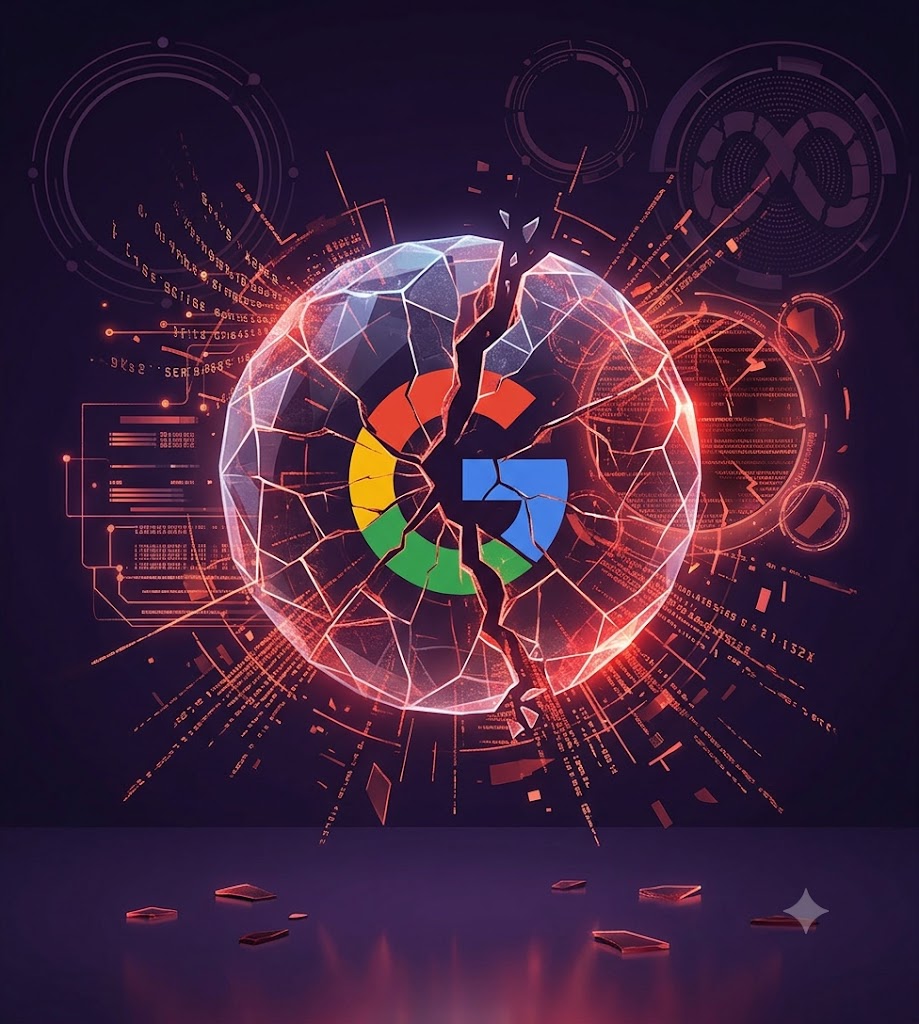
Originally expected to shift industry dynamics and set a new gold standard for B2B enterprise integrations, the abrupt cancellation of its launch has sent shockwaves through both the developer community and financial markets.
The 2-Million Token Context Window and the "Lost in the Middle" Phenomenon
The most heavily marketed feature of Gemini 3.5 Pro was its colossal 2-million-token context window. In theory, this capacity meant that thousands of pages of PDFs, massive code repositories, or exhaustive datasets could be processed in a single prompt. However, leaked internal testing reports revealed that while attempting to process such immense volumes of data, the model suffered a severe degradation in its "long-horizon reasoning" capabilities.
Specifically, when tasked with extracting structured JSON data from massive text blocks to create specialized AI personas or to model complex scenarios (such as geopolitical simulations and strategic debates), Gemini 3.5 Pro exhibited significant hallucinations. The model frequently "forgot" crucial information buried in the middle of its massive context window. In generating consistent, unbroken data architectures, it fell dramatically behind powerful competitors like Claude Fable 5 and GPT-5.6.
Collapse in Coding and Automated Deployment Workflows
Another fundamental reason for the delay was the model's severe shortcomings in advanced coding and debugging. In modern web development, an AI is expected not just to write snippets of code, but to autonomously manage entire complex architectures, including GitHub Actions, CI/CD pipelines, and server deployment processes.
Testers reported that when Gemini 3.5 Pro was tasked with resolving multi-layered issues—such as troubleshooting FTP/SFTP configurations for remote servers, fixing YAML syntax errors in deployment pipelines, or managing local web development environments—it lost context and entered infinite loops. At a time when developers desperately need autonomous systems that can test their own code and safely deploy it to live websites, Google's model failed to pass the threshold required for a commercial release.
Erosion of Trust in the B2B Market and Financial Fallout
This technical setback for Google quickly transcended software engineering to become a financial crisis. Following the news of the delay, Alphabet shares plummeted by 4% within a matter of hours. In the battle for B2B enterprise market share, timing is everything. As OpenAI and Anthropic rapidly integrate into corporate API infrastructures with slashed prices and enhanced autonomous capabilities, forcing enterprise customers to wait has placed Google at a severe strategic disadvantage.
Large-scale companies looking to upgrade their web-based applications, automated service bots, and decision-support mechanisms with next-generation AI have already begun pivoting to alternative providers. Given that enterprise contracts are typically locked in for one or multiple years, this missed "integration window" represents a multi-billion-dollar opportunity cost for Google.
Conclusion: A New Trajectory for Developers
The delay of Gemini 3.5 Pro sends a very clear message to the artificial intelligence sector: Simply scaling up parameter counts or context windows is no longer sufficient to create usable intelligence. Quality, the stability of generating structured data, and consistency in solving complex engineering problems have become far more critical than raw data processing capacity. While Google returns to its laboratories to reconstruct the model's foundational reasoning algorithms, the rest of the market continues to rapidly evolve around autonomous agents and flawless AI coding infrastructures.