
Burhan Doğuş Ayparlar - July18, 2026
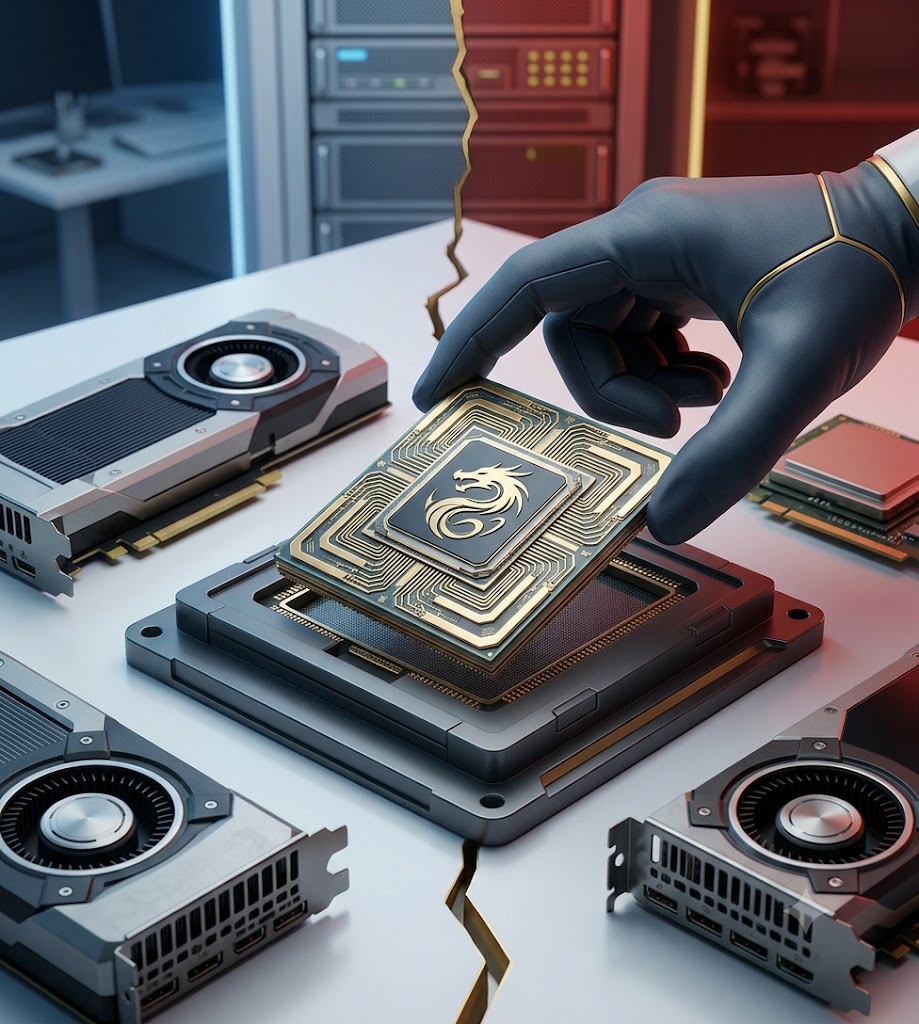
This move goes far beyond a simple corporate cost-cutting strategy; it marks a profound fracture in the global tech supply chain and signals the definitive bifurcation of AI infrastructure into two distinct poles.
The Hardware Bottleneck and the Impact of Export Controls
For the past few years, the AI sector has been under the absolute dominance of Nvidia regarding the Graphics Processing Units (GPUs) required to train and run massive language models. However, strict export restrictions imposed by the US on the sale of advanced chips to China have pushed Asia-based tech companies into an existential crisis. The exorbitant prices of chips on the black market and the perpetual uncertainty of supply have forced innovation-driven companies like DeepSeek to build their own hardware architectures from the ground up.
The next-generation silicon designed by DeepSeek focuses heavily on the inference phase rather than initial training. Optimized to process queries sent by users or other software with the lowest possible energy consumption and maximum speed, these chips promise to radically slash data center operational costs once a model is fully deployed.
New Challenges for the B2B Ecosystem and Developers
DeepSeek is not alone in this endeavor; tech behemoths such as Alibaba, Baidu, and Zhipu AI are also actively preparing to declare their hardware independence by manufacturing proprietary chips. However, this shift opens the door to an entirely new era for software architects and companies operating on a global scale. The AI hardware ecosystem is now rapidly splitting into two distinct infrastructures: a US-aligned ecosystem (based on Nvidia/AMD) and a China-aligned ecosystem (driven by domestic silicon).
This bifurcation is especially critical for development teams building web-based B2B applications or generating compute-heavy content such as geopolitical simulations featuring specialized AI strategist personas. Developers will no longer just have to optimize their projects for different AI models; they will be forced to adapt to two completely distinct hardware and cloud architectures (tech stacks). An autonomous system that operates flawlessly in one market may face unexpected latency or integration hurdles in the other market's cloud infrastructure due to these underlying hardware discrepancies.
Silicon Origin in Supply Chain Risk Management
For global businesses and enterprise cloud service providers (like AWS, Google Cloud, and Alibaba Cloud), the origin of the computing hardware is no longer merely an engineering consideration—it has become a primary risk management factor. To safeguard their platforms against service disruptions or sudden geopolitical embargoes, companies are increasingly pivoting toward multi-cloud and multi-hardware strategies.
Ultimately, DeepSeek's bold move to manufacture its own chip proves that in the realm of artificial intelligence, "software independence" is not enough; true autonomy can only be achieved by controlling the physical hardware. While the dismantling of the global monopoly may foster competition and drive down prices in the short term, in the long run, it seems destined to permanently fracture the internet and AI infrastructure along geopolitical fault lines.